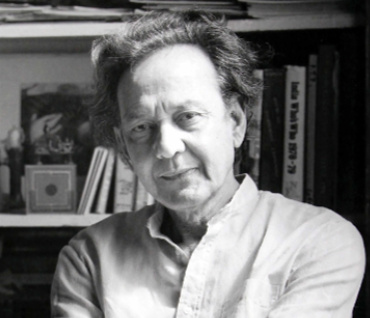
Sayed Haider Raza (1922 – 2016) was a pioneering figure of Indian modernism whose work bridged European abstraction and Indian philosophy. Born in Madhya Pradesh, he studied at the Sir J. J. School of Art in Mumbai and was a founding member of the revolutionary Bombay Progressive Artists’ Group (PAG) in 1947 alongside F.N. Souza, M.F. Husain, and K.H. Ara.
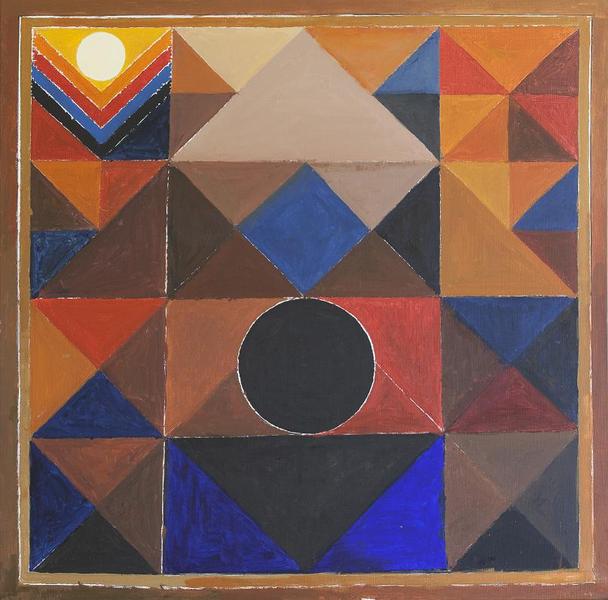
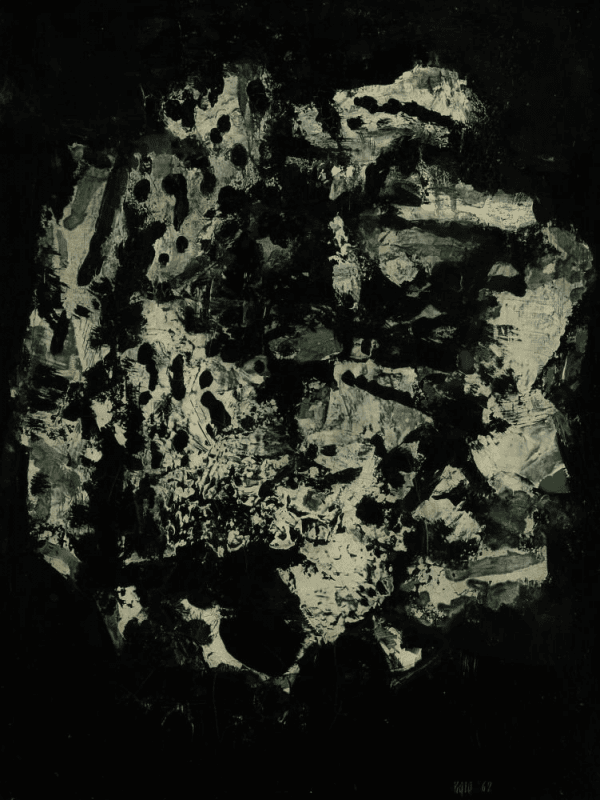
In 1950, Raza moved to Paris, where he developed a distinctive visual language heavily influenced by European modernism and Parisian abstraction. While his early practice focused on expressionistic landscapes, from the late 1970s onward he turned toward geometric abstraction centred on the Bindu—a symbolic point representing the sacred source of cosmic energy, creation, and spiritual consciousness. This motif became the defining element of his masterworks.
Raza’s contributions to modern Indian art have achieved landmark global acclaim. His iconic canvas Saurashtra (1983) fetched ₹16.42 crore at Christie’s auction in 2010, setting a world record for modern Indian art at the time, while his masterpiece Gestation realized over ₹51 crore in 2017. Today, Raza’s paintings remain among the most revered and sought-after works in South Asian art history.