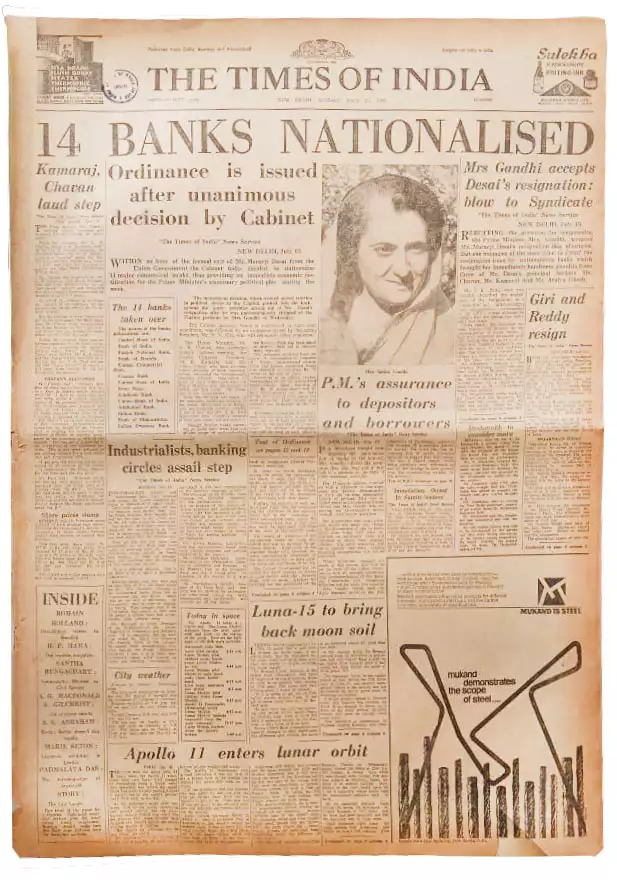
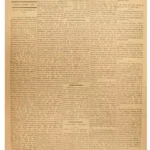
14 Banks Nationalised
This edition includes news of the announcement and lists out benefits of the scheme.
Other news reports include:
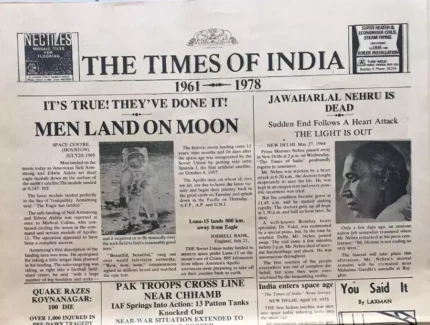
- Apollo 11’s entry in the lunar orbit
- Soviet Union’s unmanned mission to the moon, Luna 15
- Crosswords, puzzles and advertisements
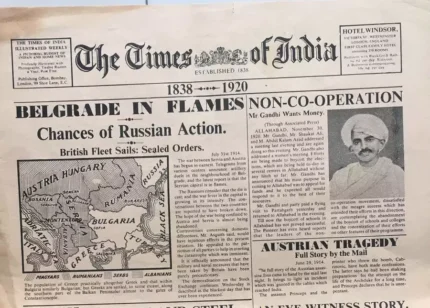
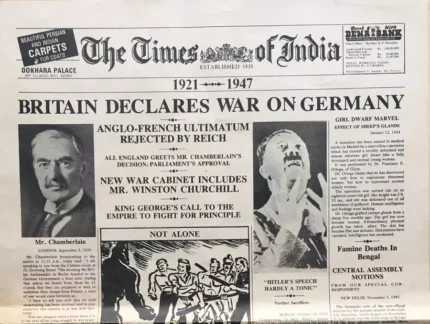
The Times of India is an Indian English language daily newspaper. Founded 178 years ago, it is the oldest English daily of India and largest selling English newspaper in the world according to Audit Bureau of Circulations. It was ranked among the world’s six best newspapers by BBC in 1991.
It is owned and published by Bennett, Coleman & Co. Ltd. The Times of India issued its first edition on 3rd November as The Bombay Times and Journal of Commerce. Initially, the paper was published only on Wednesdays and Saturdays and only in 1850 it began to publish daily editions. In 1861, editor Robert Knight changed the name to the present day ‘The Times of India’.
Comes with a Curatorial Note and an Authenticity Certificate.
Bank Nationalisation with Newspaper print.
The featured newspaper carries the most important policy decision of the year viz. Nationalisation of Banks.
The nationalization of banks was a major plan of action under the ten-point programme introduced by Indira Gandhi in her first tenure as a Prime Minister. The importance of this revolutionary change was to balance the uneven distribution of credit between the growing commercialized section of the society and the rural workers and small borrowers. This helped the poor labourers and farmers to get loans more easily for their livelihood purposes.